


Master in Sports Markets, Management and Sports Law – ISDE & Iusport
Program director:
Luis Fernando Pamplona Novaes
Campus:
Madrid
Date:
September 2026
LANGUAGE:
Spanish
ACADEMIC STAY:
Switzerland
Sport is not just passion, it is a global market that demands your legal and strategic expertise.
The Master in Sports Markets, Management and Sports Law is designed to educate the professionals who will lead the sports industry from a legal, strategic, and management perspective. Delivered by active experts from clubs, leagues, agencies, and specialized law firms, this program prepares you to master the sector’s key areas—from negotiating contracts and transfers to managing media rights, sponsorships, sports marketing, and the resolution of international disputes.
Through a strongly hands-on methodology, you will work on real cases, analyze how sports markets operate, and develop the skills to manage clubs, events, and brands in a globalized environment. You will also explore highly topical issues such as eSports, European Union sports regulation, athletes’ data protection, and reputational crisis management. This master’s program will not only connect you to an international network—it will shape you into a professional ready to turn challenges into opportunities in one of the world’s most dynamic and profitable industries. Are you ready to make your mark in sport?
COLLABORATE
GREAT CENTERS

DO YOU WANT TO KNOW MORE?
REQUEST MORE INFORMATION
K
A global alumni community specialized in Law
In rankings for legal education and for faculty
%
Employability at the top firms and law offices
Introduction and objectives
The sports industry offers multiple career opportunities in a wide variety of fields, both institutional, business, and legal. Achieving a successful professional career in any of these areas necessarily requires training that begins with a global understanding of the entire sector and each of its participants, leading to a specialization that helps us secure the position we feel most inclined to and are best qualified for.
The master’s degree in sports markets, Management, and sports law is the pathway that ISDE, as a pioneering institution and leader in sports law and management training, offers to those who wish to prepare for leadership positions in the sports world, learning through a practical method alongside the most renowned professionals in the sector.
In the first phase of this comprehensive training, all the program subjects are studied in depth, always applying theory to situations that faithfully replicate the cases and working environment of professionals in the field.
During the second phase of the program and throughout the internships, Full Time students work integrated into one of the firms, clubs, or organizations in the sector, with a view to their eventual incorporation. They will thus join the many Alumni of the institution who today hold the most prominent positions in the sports world.
Sponsor
Structure, location and calendar
CAMPUS: Madrid
DURATION: One academic course.
STRUCTURE: Two phases:
First phase: Classroom instruction:
One academic semester in the classroom, dedicated to practical classes with leading professionals in the field.
Classes from Monday to Thursday in the afternoon.
Some mornings per week, students will attend conferences and practical sessions at the offices of ISDE’s collaborating institutions in the city of Madrid.
Fridays are devoted to personal study, group work, and workshops.
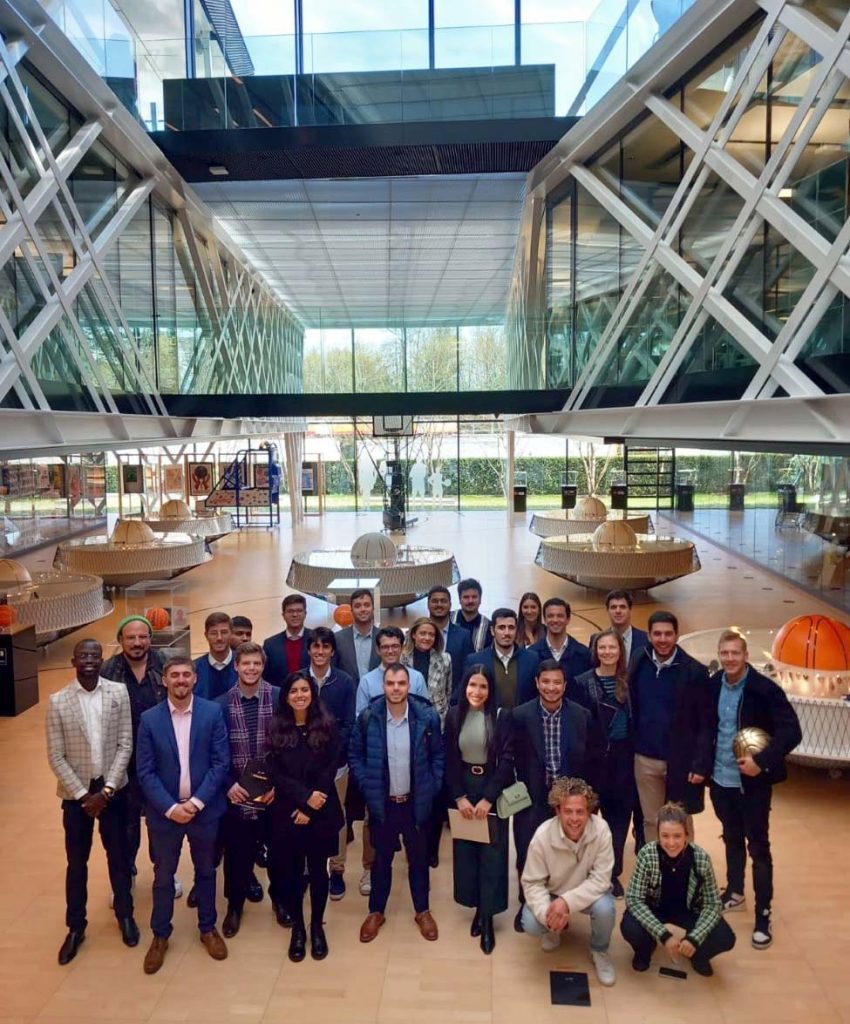
The Master’s in Sports Markets, Management, and Sports Law includes a training stay in Switzerland, visiting the most important international sports institutions and some specialized firms based in that country.
During the first phase of the program, the Digital Business course will also be conducted.
Second phase: Integration in internships:
Between three and six months of integration in sports institutions, clubs, law firms, or legal departments of large national and international companies collaborating with ISDE (more than 300).
Career Opportunities
This program has several job opportunities, of which the most outstanding are:
- Management of sports entities
- Law firms
- Sports agent
- Sports consultancy
- Sports equipment industry
- Sports centers
- Federations, leagues, clubs and associations
- Public administration
- Training and education
- Management in sports service companies
- Organization of sporting events
ACADEMIC PROGRAM
Module 1: Introduction to Sports and Governance
1.1. Introduction to Sports:
- Different manifestations of sports: amateur vs. competitive sports.
- The Olympic Movement.
- The Sports Pyramid.
- States, the European Union, and Sports.
The European Federative Model:
- Private associations and their legal framework.
- FIFA.
- FIBA.
- ATP.
- Other federations.
Professional Leagues and Other Private Entities:
- Premier League.
- EuroLeague Basketball.
- Moto GP.
- Formula 1.
Other Relevant Entities:
- FIFPRO.
- ECA.
- Trade unions.
The American Sports Model and Its Leagues:
- NBA.
- MLB.
- NFL.
- NHL.
- MLS.
The Spanish Sports Model and the Latin American Sports Model:
- Historical evolution and peculiarities.
- Law 10/1990 and other regulations.
- Sports in Ibero-America: a comparative analysis.
Module 2: Stakeholders
Sports Professions:
- Regulated professions and free circulation.
- Athletes’ employment relationship.
- Independent athletes.
Entities in Sports Practice:
- Associations and sports joint-stock companies.
- Sports clubs.
- Other sports entities.
The Agent:
- Representation and intermediation of athletes.
- Representation and intermediation in football and FIFA’s new regulations.
- Representation of minors.
Other Sports Agents:
- Referees.
- Coaches.
- Executives.
- Fans.
- Investors.
Module 3 – Finance in Sports
3.1. Strategic Plans in Sports:
- Structuring sports projects.
- Identity: mission, vision, and values.
- SWOT analysis.
3.2. Sources of Income in Sports:
- Annual accounts of clubs and sports organizations.
- Planning and management control of sports entities.
- Audiovisual rights.
- Tokenization and digital income.
- Financial Fair Play and other similar regulations.
3.3. Monetizing Sports Facilities:
- Management of infrastructure.
- Economic exploitation of sports venues.
- Quality and safety management.
- Business Intelligence and technology.
3.4. Mergers and Acquisitions in Sports:
- Mergers and acquisitions in sports.
- Investment funds in sports.
- Capital markets and sports.
- The Arab investment model and other models.
3.5. Taxation and Sports:
- Relevance and different sources of income in sports.
- International taxation in sports.
- Taxation in Spain.
- Taxation of sports events and special regimes.
Module 4 – Marketing, Sponsorship, and Advertising:
4.1. Marketing and Sports Activities:
- Building and managing identity in sports.
- Corporate sponsorship policy and sponsorship activation.
- Ambush Marketing in sports.
4.2. Content Production:
- Social media and sports.
- Gamification.
4.3. Sponsorship of Sports Activities:
- Sponsorship, patronage, and sponsorship.
- Sponsorship agreement.
- Designing sponsorship projects.
4.4. Intellectual and Industrial Property:
- Regulation and its international dimension (WIPO and OAMI).
- Spanish intellectual property legislation.
- Trademarks and their protection – Law 17/2011.
- Trade names.
- Registration procedures and protection mechanisms.
4.5. Data Protection.
Module 5 – Sports Management/Technical:
5.1. Scouting and Data:
- Talent identification.
- Scouting tools and platforms.
- Monitoring other teams.
- Markets and transfers.
5.2. Building a Team:
- Role of the Sports Director.
- Choosing the coach and their staff.
- Athlete profiles.
- Group management and communication.
5.3. Other Complementary Disciplines:
- Psychology in sports.
- Nutrition.
- Neurological training.
- Sports medicine and physiotherapy.
Module 6 – Governance, Integrity, and Sports:
6.1. Governance of Sports Entities:
- Codes of good governance in sports.
- Ethical codes and their application in sports.
- Social responsibility of sports entities.
6.2. Anti-Doping Control:
- Anti-doping regulation.
- WADA.
- Education and prevention.
6.3. Sports Betting:
- Global scope of gambling and betting activities.
- Regulation of gambling and betting in Spain – Law 13/2011.
- Online gambling.
6.4. Match Fixing:
- Match-fixing: a case study.
- Comparative analysis of legal systems.
6.5. Crisis Management:
- Racism, sexism, xenophobia, and homophobia in sports.
- Civil and criminal liability in sports.
- Relationship with the media.
Module 7 – Sports Law:
7.1. Introduction to Sports Law:
- Lex Sportiva and the Specificity of Sports.
- Sports Legal Systems in Spain and Latin America.
- International Sports Legal Systems.
7.2. Dispute Resolution in Sports:
- Dispute resolution mechanisms in Spain.
- Dispute resolution mechanisms in Latin America.
- International disputes.
- Sports arbitration.
- TAS – Court of Arbitration for Sport.
- Mediation.
7.3. Labor Law and Sports:
- Labor law and sports in Spain.
- Labor law and sports in Latin America.
- European Union rules and international treaties.
7.4. Sports Contracts:
- Different contracts in sports.
- Contract negotiation and drafting.
Module 8 – E-Sports and Gaming:
8.1. Introduction to E-Sports:
- History of video games.
- E-Sports vs. Gaming.
- Market analysis.
- Market regulation.
8.2. Stakeholders:
- Developers.
- Organizations.
- Pro-Players and Managers.
- Streamers.
8.3. E-Sports and Other Sports:
- Football clubs.
- The case of cricket.
- Formula 1.
- NBA.
Module 9 – Sports and Media:
9.1. Broadcasting Rights:
- General Interest Events and EU Regulation.
- Provisions of the General Audiovisual Communication Act.
- The Broadcasting Regime of La Liga Football Matches in Spain – Royal Decree-Law 5/2015.
9.2. Relationship Between Athletes and the Media:
- Exercise of informational activities and their limits.
- Information search – How sports journalists think.
Note: The content of this program is subject to change due to the dynamics of the sports industry and the influence of professors who adapt their subjects to market-driven modifications.
FACULTY
-
Alberto Ruiz de Aguiar: Founding Partner of SPORTIA LAW
-
Ana Ballesteros: Legal Director of the Royal Spanish Athletics Federation
-
Alfonso Jiménez Prado: Deputy Director of Fundación Cantabria Lab
-
Álvaro Gómez: General Director of C.F Rayo Majadahonda S.A.D
-
Agustín González: General Secretary of the Legal Advisory Agency of the Spanish Agency for Health in Sport
-
Benjamin James Rutherford: Senior Director, Legal at International Tennis Integrity Agency
-
Bruno Comicholi: MA Governance Services Manager at FIFA
-
Daniel Cerejido: Club Relations Senior Manager at ECA
-
Daniel Soto Salvia: General Counsel Adviser Euroleague Basketball
-
David Santivañez: Lawyer, Esports MENA 2022
-
Ester Queraltó: Lawyer, Specialist in Sports Law and Compliance
-
Gaspar Díez: Head of Sports Section at Europa Press
-
Gema Barrasa: Legal Director at Rayo Vallecano in Madrid
-
Guilherme Von Cuper: CEO at Berlin Sports
-
Hugo Pazos: Key Account Manager at You First
-
Ignacio García Begoetxea: Founder & CEO of Darhima Sports
-
Iván Bikovskiy: Partner at SILA International Lawyers
-
José Francisco Redondo: President – Competition and Discipline Subcommittee – Royal Spanish Football Federation of Madrid
-
Laura Hernández: General Secretary of AEAF
-
Leire Murillo Rubio: Legal Specialist at You First
-
Leonardo Máximo: Partner at Roc Nation Sports Brazil
-
Lucía Signes: Associate in the IP & Digital Business area at CMS Albiñana & Suárez de Lezo
-
Luis Beneyto: Lawyer, Deputy Director of the Legal Advisory Board at Autocontrol
-
Luz Giordano: FIFA Consultant – Regulatory Governance & Compliance
-
Manuel Tello: Spanish Footballer
-
Manuel Torres: Lawyer, Camero Abogados
-
Miguel Melgar: Sports Director – CF Fuenlabrada LALIGA SMARTBANK
-
Miguel-Roca Junyent: Founder of Roca Junyent
-
Pedro J. López Martínez: Technical Coordinator and Sports Promotion Manager – Spanish Paralympic Committee
-
Ramiro Lahera: President of the Madrid Triathlon Federation
-
Ramón Sánchez Galvez: General Secretary of the Spanish Commission for the Fight Against Doping in Sport
-
Reyes Bellver: Women’s Football Director – Royal Spanish Football Federation
-
Rosalía Ortega Pradillo: President of the Ibero-American Institute of Sports Law
-
Santiago Zambrano: Founder and Director of Conlegal Sports
-
Stefano Malvestio: International Consultant, Bichara & Motta Advogados
*Closer is subject to change
ACCREDITED DEGREE
Once the relevant Program has concluded and ISDE has verified that the STUDENT has completed their work satisfactorily, the STUDENT will receive the corresponding Degree certificate for each PROGRAM.
In compliance with current legality and, specifically, as set forth in article 4.4 of decree 84/2004, it is noted that ISDE’s programs are professionally oriented and therefore, unless explicitly stated otherwise, they are courses that do not lead to the acquisition of a title with official value, but to that of a proprietary title from ISDE.